Circular Procurement
Transitioning to a circular model involves prioritizing durable goods with high repairability scores. This reduces the "Total Cost of Ownership" (TCO) and prevents frequent replacement cycles that drain liquid reserves.
A systematic approach to minimizing resource consumption and optimizing expenditure to accelerate the formation of liquid reserve assets. Sustainable consumption is not merely an ethical choice, but a fundamental economic strategy for long-term financial stability.
Explore Strategy
Expense optimization is defined as the systematic reduction of non-essential outflows without compromising the operational integrity of the household or business unit. This process requires a granular audit of recurring costs, identifying "leakages" where capital is exchanged for low-utility services or products. By implementing strict procurement protocols, individuals can redirect significant portions of their income toward their Emergency Fund Resource Conservation Center.
The protocol begins with the categorization of expenses into fixed, variable, and discretionary tiers. Fixed costs, such as housing and insurance, are reviewed for refinancing opportunities or provider switching. Variable costs, specifically food and transport, are managed through bulk procurement and fuel efficiency measures. Discretionary spending is subjected to a "72-hour delay" rule to mitigate impulse-driven resource depletion.
"The conservation of financial resources is functionally equivalent to the generation of new income. A dollar saved through efficiency carries a higher net value than a dollar earned, as it is exempt from the energetic and temporal costs of labor."
— Resource Management QuarterlyTransitioning to a circular model involves prioritizing durable goods with high repairability scores. This reduces the "Total Cost of Ownership" (TCO) and prevents frequent replacement cycles that drain liquid reserves.
Reducing physical waste directly correlates with lower metabolic and operational costs. Efficient food management and plastic reduction decrease disposal fees and indirect procurement expenses.
Investing in small-scale energy efficiency (LED, insulation, smart thermostats) creates a permanent reduction in the "burn rate" of a household, making the reserve fund last longer during crises.
Monitoring utility consumption through quantitative metrics allows for the identification of anomalies and the validation of conservation efforts. A standardized metric system provides the data necessary to adjust behaviors and technical settings for optimal performance.
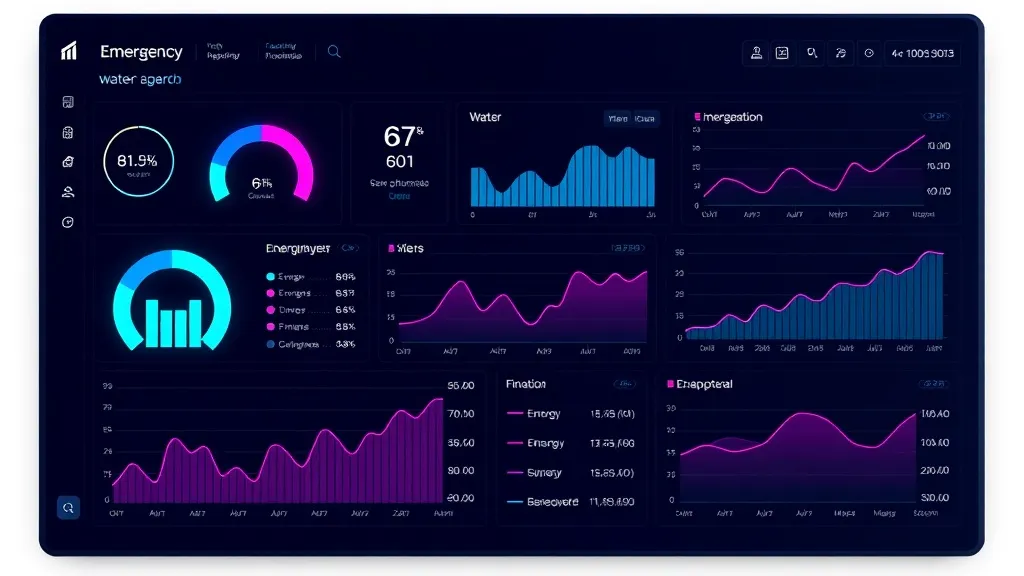
The final phase of the conservation strategy is the redirection of saved capital into the reserve infrastructure. Savings generated through reduced utility bills or optimized procurement are not to be reabsorbed into discretionary spending. Instead, they must be automatically transferred to high-yield or highly liquid accounts. This creates a compounding effect where conservation efforts directly fuel the financial safety net.
Scheduled transfers of monthly utility savings into a designated reserve account to ensure consistency.
Periodic review of the fund to ensure the saved surplus is maintaining purchasing power against inflation. See Maintenance Protocols.